If you’ve been in marketing for more than five minutes, you’ve probably heard the term SEO a thousand times. Search Engine Optimization has been a great way to get found online for many years. But lately, there’s a new acronym [or group of acronyms] making the rounds:
- GEO, or Generative Engine Optimization
- AI SEO, just like it sounds – SEO but for AI tools or “LLMs”
- AEO, or Answer Engine Optimization
- LLMO, Learning Language Model Optimization
GEO and other acronyms aren’t just buzzwords. They’re a response to the way search is changing, and it’s going to impact how people find your business sooner than you think.
Have you heard of AI 2027? While much of it is speculation and the authors welcome debate and counterarguments, its an interesting read related to this topic.
For industries like cannabis or other local businesses, where ads are tricky or flat-out banned, understanding the difference between SEO and GEO can mean the difference between being found and being invisible.
What is GEO?
GEO stands for Generative Engine Optimization. That’s a fancy way of saying:
“How do we get AI-powered tools like ChatGPT, Google’s Search Generative Experience (SGE), Perplexity, and Bing Copilot to talk about our brand when the right questions are asked?”
These tools don’t just list links like Google does. They answer questions directly, and sometimes that’s the whole interaction. If your business gets mentioned or “cited” in those answers, you’ve just scored instant trust and visibility. It doesn’t mean a click or sale will happen just yet, but it’s helpful.
Example:
- A dispensary in Denver shows up in ChatGPT’s response to “What’s the best dispensary in Denver?”
- A CBD brand gets name-dropped in Perplexity’s answer to “What are the benefits of CBD oil?”
That’s GEO [or any of the other acronyms noted above] in action. It’s about making sure you’re part of the AI’s answer, not just buried in a list of links.

The irony here is that these AI tools [LLMs] are actually pulling websites from Google, if they mention them at all. More to come on this later…
What is SEO?
SEO, or Search Engine Optimization, is the older, more established cousin. It’s about creating content and structuring your website in such a way that you get found when people are searching [Googling] certain queries or topics.
That means things like:
- Using the right keywords in your content
- Earning backlinks from reputable sites
- Making sure your site loads quickly and looks good on mobile
- Adding structured data so Google can display rich snippets
For a cannabis business, that could mean ranking for “dispensary near me Detroit” “THC-infused gummies in Denver” or “what are terpenes?”
SEO not only still works, but it’s more important than ever as the majority of search traffic is still coming from Google. SEO is actually the foundation for all your digital visibility. It ensures your website is structured, authoritative, and trustworthy in the eyes of Google, and understands which pages to recommend and when for searchers.
GEO doesn’t operate in a vacuum. AI-powered tools like ChatGPT and Google’s SGE pull information via API keys from the web, and thus Google is still the primary source. If your SEO isn’t solid, GEO has nothing reliable to reference. There are many different things going around about what is actually needed in order to “rank in AI tools,” however, we’re far from knowing confidently what will work like we know now with SEO. [One thing I haven’t heard many people talk about is the fact that every industry is going to be different in terms of what tactics will work the best for your website.] We’ll talk more about these tactics later on, but for now noting that at the end of the day, good SEO is the fuel that powers GEO / AI search.
By investing in SEO first, you’re not just ranking in traditional search; you’re positioning your brand to appear in AI-generated answers, creating a two-pronged strategy that maximizes visibility across all types of search behavior.
The thing is, SEO has been ever evolving and “GEO,” AI SEO or whatever you want to call it, it’s just the next iteration. Check out this creative video with a story you’ll surely remember about the evolution of SEO from one of the best SEO’s I know, Lily Ray.
GEO vs SEO: How They’re Different… and the Same
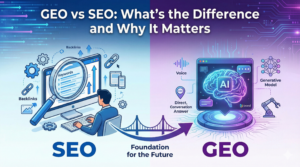
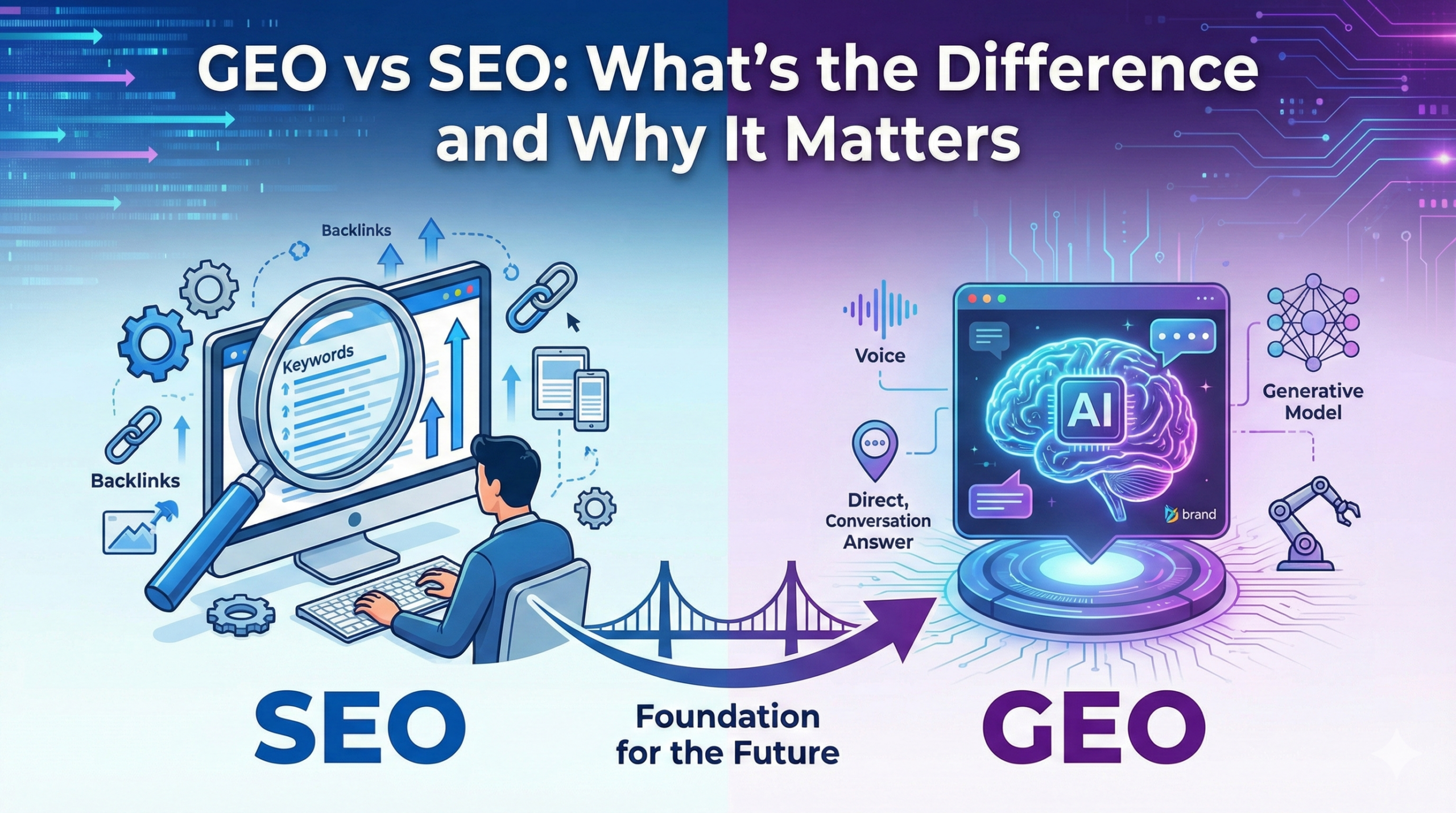
SEO is the foundation that makes GEO possible. Once your website is well-optimized, authoritative, and structured for Google, AI-powered tools like ChatGPT and SGE can find, trust, and cite your content. GEO builds on SEO, taking the signals you’ve already established and making sure they appear in the answers your audience is asking for.
With that in mind, the easiest way to think about the difference is:
- SEO = Optimizing for traditional search engines
- GEO = Optimizing for AI-powered search assistants
Both want quality, trustworthy, well-structured content. The difference is where that content gets surfaced and how people interact with it.
| GEO | SEO | |
| Goal | Be cited or recommended in AI answers | Rank in search engine results |
| User Behavior | Conversational questions | Keyword-based searches |
| Focus | Authority, trust, structured data, entities | Keywords, backlinks, technical health |
| Metrics | AI mentions or “citations,” referral traffic from AI tools, branded search increases | Rankings, clicks, organic traffic, CTR |
Why This Matters (Especially for Cannabis Businesses)
Search habits are shifting. People aren’t just typing keywords into Google anymore; they’re asking full questions to AI tools.
If someone asks ChatGPT, “What’s the best dispensary in Portland?” and your name doesn’t come up, you’ve just lost a potential customer.
For cannabis brands, this is even bigger. Since most paid ads are off the table, organic strategies like SEO and GEO are one of your main growth channels. Getting in early on GEO increases the chance your brand becomes the trusted recommendation AI tools give.
So, Do You Need Both?
Absolutely. SEO keeps you visible in the searches people still do on Google and Bing. GEO gets you visible in the conversations they’re having with AI tools.
If you ignore SEO, you’re invisible in traditional search. If you ignore GEO, you’re invisible in the next generation of search.
The smartest move is to build a strategy that covers both — one that boosts your organic search rankings today and positions you in AI-generated answers tomorrow.
How We Help
We work with local businesses and cannabis and wellness brands to:
- Audit your current SEO and GEO readiness
- Build authority and trust signals AI models look for
- Optimize your content for both keywords and entities
- Track where you’re showing up — in SERPs and AI answers
Search isn’t just evolving; it’s already changed, but this isn’t new information. Search has always been like this. Brands that adapt now will own the space later. We’ve done the work and seen the results.