SEO Agency for Dispensaries & Cannabis Operators

Organic and AI search services for cannabis operators, by a cannabis operator

cannabis SEO results free consultation Evergreen
Finally, an agency who "gets" cannabis

Outrank the competition with our process

Over a decade of combined cannabis industry expertise taught us exactly how dispensaries and cannabis operators [plant-touching & ancillary] can dominate organic search results while staying compliant. We increase your organic revenue through proven, penalty-proof strategies built specifically for the cannabis industry.

dispensary SEO case study before after
Case Studies

Results
We've Delivered

Dispensary Operator

VERTICAL:
Cannabis Dispensary

Challenge

A dispensary had been open for nearly a year and was getting little traffic for all 3 of their locations. They desired to rank higher in each location in order to capture more local traffic.

Solution

Through our process, we uncovered many technical errors which ended up being so bad we needed take a few extra months to essentially relaunch a new website. We addressed all of the errors, along with building out better, higher quality location pages designed to better support users. We also adjusted the terms being used on each of these pages to better align with the purpose of each page.

Outcome

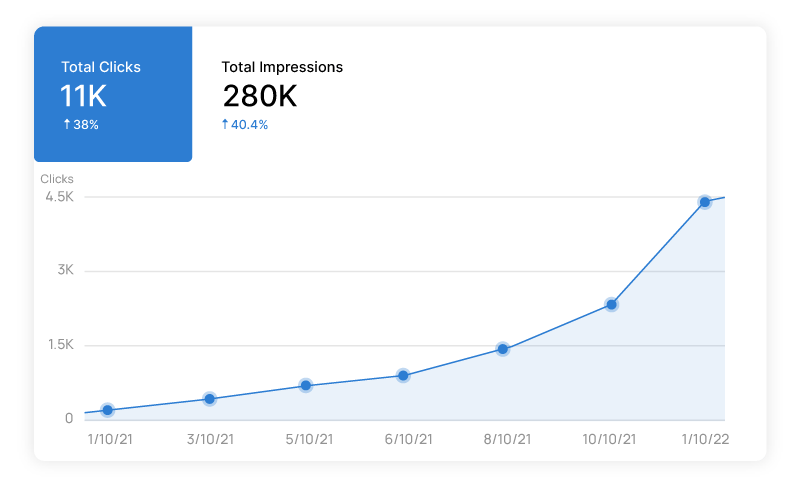
After about 90 days, the site exploded with organic rankings and traffic, seeing 116.5% organic traffic growth, and 135% growth in organic impressions.

eCommerce CBD

VERTICAL:
eCommerce Hemp Retailer

Challenge

CBD e-Commerce brand looking to grow their organic traffic started working with us.

Solution

We noticed they seemed to have been impacted negatively by a recent algorithm update from Google. We went to work helping them optimize their content and remove the items that likely caused the algorithm to de-rank their website.

Outcome

As a result, this website saw an 82% increase in non-branded organic traffic over 6 months!

B2B Company

VERTICAL:
Cannabis & Hemp Manufacturing

Challenge

A B2B cannabinoid emulsion supplier had little organic traffic and visibility for their target products. This meant they were bringing in little to no leads from their website.

Solution

We helped this B2B company strategically adjust their service pages, create new pages, as well as create content specifically designed for their audience.

Outcome

The result was organic traffic increased by 83% as well as increased leads by 45% and most important, lead quality.

Cannabis Operator

VERTICAL:
Cannabis Manufacturing

Challenge

A cannabis extraction company wanted to increase their organic traffic to increase leads to their website forms.

Solution

We noticed a lot of content that needed to be updated and SEO optimized, so we started with updating existing pages before moving on to create new content.

Outcome

Over about a year period, this company saw a 428% increase in organic traffic and a 74% increase in leads from form fills on their website.

Cannabis Dispensary Operator

VERTICAL:
Local Cannabis Dispensary

Challenge

This dispensary desired to improve their organic traffic for their blog, as well as reach more cannabis tourists visiting their area and local markets.

Solution

We developed a content strategy around lower in the funnel terms related to cannabis products, as well as target various types of cannabis tourism.

Outcome

Over a years time, they saw 1,360% increase in organic blog traffic & increased visibility through higher rankings for cannabis tourism in their main local market.

Cannabis Operator

VERTICAL:
Local Cannabis Dispensary

Challenge

The operator had two locations with a third opening. In its most competitive city, it ranked outside the top 20 in Google Maps and outside the top 20 organically for non-branded “dispensary” terms.

Solution

Evergreen Digital built the plan around on and off page tactics. Better entity connections were made off-site and on-page targeting high-value dispensary terms in each target city. Map listings were better optimized fro al 3 locations as well. 

Outcome

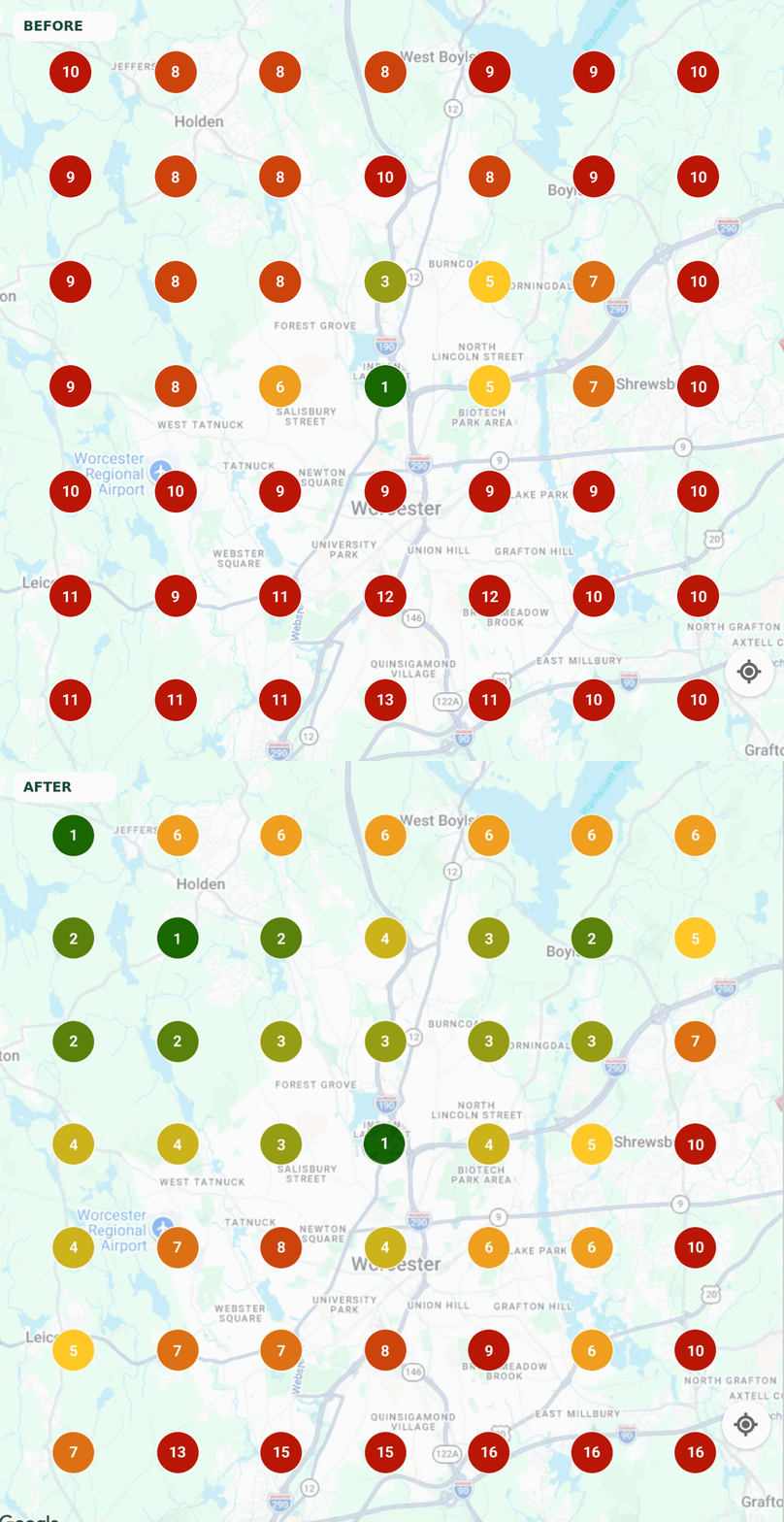
Within six months, organic keyword rankings grew 159% and the location entered the Maps top 12. It now ranks in the top 5 organic listings and top 6 map listings, competing directly against major MSOs. The newer location reached the Maps top 3 within three months and, a year later, ranks #2 in Maps behind a major MSO and #1 organically. The third location ranks #1 organically and holds #1 to #2 in Maps against a much larger retailer.

Who We Serve

Cannabis Business Types

We have worked with all types of cannabis companies from dispensaries to brands, hemp beverages to MSO’s, manufacturers, B2B, and more. Contact us today to talk further about how we can help you!

brady madden flower expo speaker

Why Evergreen Digital

Practitioner-Led, Not Account-Managed

Search Everywhere Optimization: SEO + AEO + GEO, Unified

Specialized, Not Generic

Human-Led, AI-Augmented

Ready to Grow

Ready to Grow
Across Every Search Platform?

Frequently Asked Questions

Cannabis SEO (search engine optimisation) is the process of improving a cannabis, dispensary, CBD, or cannabis B2B website so it ranks more prominently in unpaid search results on Google and other search engines.

It combines technical SEO, content, local SEO, Google Business Profile optimization, authority building and conversion optimization to help cannabis businesses appear when potential customers search for their products, services or locations.

Unlike SEO in less-regulated industries, cannabis SEO also has to account for advertising restrictions, state-specific regulations and the way consumers discover dispensaries across Google Maps, organic search, AI search engines and third-party cannabis platforms.

Dispensary SEO is a specialised form of local SEO designed to increase a cannabis dispensary’s visibility in Google Maps, the local pack and organic search results for searches such as “dispensary near me” and location-specific cannabis queries.

The fundamentals overlap with regular local SEO, but dispensaries operate in a more restricted and competitive environment. A dispensary SEO strategy needs to account for cannabis advertising policies, Google Business Profile restrictions, state regulations, cannabis-specific search behavior, menu and product discovery, reviews, local landing pages and industry-specific backlinks and citations.

Importantly, ranking in Google Maps and ranking in traditional organic results are not the same problem. Google Business Profile and location signals have much greater influence over Maps visibility, while website content and backlinks play a larger role in local organic rankings.

Most dispensaries benefit significantly from SEO because customers commonly use Google Search and Google Maps to find nearby dispensaries, compare options, research products and decide where to buy.

SEO helps a dispensary become visible during those searches without having to pay for every visit or lead.

SEO is particularly valuable for cannabis businesses because paid advertising options are more restricted than in many other industries. A strong organic presence can generate recurring discovery through Google Maps, traditional search and increasingly AI-powered search experiences.

The real goal isn’t simply “more traffic.” It’s getting the dispensary into the consideration set when somebody with buying intent is deciding where to shop.

Cannabis SEO typically costs between $1,500 and $6,500+ per month, although pricing varies significantly based on competition, market size, the number of dispensary locations and the amount of work required.

Multi-location operators and cannabis brands competing nationally can require larger budgets than a single dispensary targeting one local market.

The scope can include technical SEO, content, Google Business Profile optimization, local SEO, digital PR or link acquisition, AI search optimization, conversion tracking and ongoing strategy.

Cheaper cannabis SEO services exist, but price should not be the primary selection criteria. Poor SEO can leave a business paying twice: once for inexpensive work that produces little value, and again for an experienced agency to diagnose and repair it.

Cannabis SEO typically takes around 3–6 months to produce meaningful organic growth, although some improvements can appear sooner and highly competitive campaigns can take longer.

The timeline depends on the website’s existing authority, technical condition, competition, location, backlink profile and the search terms being targeted.

You shouldn’t have to wait six months with no evidence that anything is happening. A cannabis SEO agency should report leading indicators such as improved indexation, keyword movement, Google Maps visibility, impressions, qualified organic traffic and conversions while longer-term revenue growth develops.

The important distinction is between time to movement and time to ROI. They aren’t necessarily the same thing.

A cannabis SEO agency increases a cannabis company’s visibility in organic search, Google Maps and relevant AI search experiences, then turns that visibility into measurable customers, leads or revenue.

That normally includes keyword and competitor research, technical SEO, site architecture, content strategy and production, Google Business Profile optimization, local SEO, internal linking, backlink acquisition, digital PR, entity optimization, AI search optimization and conversion tracking.

For dispensaries, the work should also connect search visibility to actual commercial outcomes such as calls, direction requests, menu visits, transactions and revenue, not just rankings and traffic.

Choose a cannabis SEO company based on relevant industry experience, evidence of results, transparency with their process, and its ability to connect SEO activity to revenue. Not simply rankings or traffic.

The agency should understand both traditional SEO and the restrictions and local-search dynamics specific to cannabis businesses.

Ask what they will actually do each month, how they build links, how they measure performance, how they approach Google Maps, whether they understand cannabis advertising and content restrictions, and how their strategy changes between single-location dispensaries, multi-location operators and national cannabis brands.

Avoid agencies selling the exact same SEO package to every cannabis company. Your strategy should be based on your market, competitors, existing assets and commercial objectives.

Before hiring a cannabis SEO expert, ask them to explain what they would prioritize for your website, why those actions matter and how they will measure whether the campaign is making money.

Useful questions include: What cannabis companies or dispensaries have you worked with? How will you measure revenue from organic search? How do you approach Google Maps versus organic rankings? How do you acquire backlinks? Who creates the content? How do you handle cannabis compliance? What will you report every month? What results should we expect in the first 3–6 months?

Most importantly, ask them what they wouldn’t do. A competent SEO should be able to identify low-value work instead of filling a retainer with deliverables that look impressive but don’t move rankings or revenue.

SEO allows cannabis businesses to earn visibility in Google’s unpaid search results even when their ability to purchase advertising is restricted.

Organic rankings are separate from Google Ads, so dispensaries and cannabis brands can optimize their websites and Google presence to appear for relevant searches without bidding on those keywords.

That makes SEO strategically important in cannabis because Google Ads currently prohibits ads promoting recreational marijuana in the U.S., while allowing only specific exceptions such as qualifying CBD advertising. Google is also testing limited cannabis Search advertising in Canada through the end of 2026.

SEO therefore gives cannabis businesses an owned acquisition asset rather than making growth entirely dependent on advertising platforms whose cannabis policies can be restrictive or change over time.

Dispensaries generally cannot advertise recreational marijuana directly through Google Ads in the United States, and cannabis advertising is also heavily restricted on Meta platforms.

The exact rules depend on the product, location, platform and campaign, so cannabis businesses should verify current platform policies before launching paid media.

Google, for example, prohibits U.S. ads promoting marijuana and products or services facilitating recreational drug use, while permitting certain certified topical hemp-derived CBD products under specific conditions. Google is currently running a separate limited cannabis advertising pilot in Canada.

This is one reason cannabis businesses often invest heavily in SEO, local search, organic social, email, partnerships and other acquisition channels they can control more directly.

Yes. Cannabis SEO content should account for the advertising, marketing and promotional rules of every state or jurisdiction in which the business operates.

Requirements can differ significantly between markets, particularly around health claims, age restrictions, promotions, product claims and language that could appeal to minors.

We incorporate applicable compliance requirements into the content process, but the cannabis business or its legal/compliance team should remain the final authority on regulated claims and state-specific legal requirements.

Compliance isn’t separate from SEO in this industry. Publishing aggressive content that ranks but creates regulatory exposure is a bad trade.

Ranking a dispensary in Google Maps requires optimizing the Google Business Profile, strengthening reviews and local relevance, improving the associated location page and building consistent signals that confirm the dispensary’s entity, location and services.

Physical proximity to the searcher is also a major factor and cannot be “optimized” away.

For a dispensary, we focus on the correct primary category, accurate business information, reviews and review velocity, relevant services, hours, location-page optimization, local links and mentions, citations where useful, and ongoing Google Business Profile management.

The crucial point is that Maps SEO isn’t just normal SEO with a city name added. Current local-search evidence puts GBP and geographic signals among the strongest local-pack factors, while links carry substantially more weight in local organic search.

A dispensary should treat its own website as its primary digital asset and use Weedmaps, Leafly and other cannabis directories as supporting acquisition channels, not replacements for the website.

Third-party marketplaces can generate exposure, but you don’t control their rankings, fees, algorithms, policies or customer experience. Your website is an asset you control and can use to build organic rankings, first-party data, backlinks, brand authority, email audiences and conversion journeys over time.

The strongest strategy isn’t necessarily to ignore third-party platforms. It’s to use their visibility without becoming dependent on it. Build the asset you own first; use Weedmaps and Leafly as distribution.

Cannabis keyword research identifies the searches potential customers make at each stage of the buying journey, then prioritizes them based on intent, competition, local relevance and commercial value.

For a dispensary, that can include high-intent searches such as “dispensary near me,” product and category searches, location-specific queries, informational questions, brand searches and comparison queries. For a national cannabis or CBD company, the keyword universe can be substantially broader.

We don’t choose keywords purely because a tool reports high search volume. We analyze the actual search results, buyer intent, competitors already ranking, likelihood of ranking and what the traffic is worth to the business.

The best cannabis keyword isn’t necessarily the one with the most searches; it’s the one you can realistically rank for that produces profitable customers.

Yes. Cannabis websites can build backlinks, and quality backlinks can materially improve organic search visibility in competitive cannabis markets.

The challenge is that some mainstream publishers and websites restrict cannabis content, so link acquisition often requires more specialized prospecting.

We evaluate cannabis backlink opportunities based on topical and local relevance, website quality, organic visibility, placement, editorial context, indexation, authority, persistence, anchor opportunity and risk, not simply a third-party metric such as Domain Rating.

For dispensaries specifically, the link strategy should also reflect the ranking surface. Locally relevant links can help support local visibility, while strong industry-relevant and authoritative links become particularly important when competing in traditional organic results.

Cannabis SEO ROI is measured by connecting organic search and Google Maps activity to business outcomes such as calls, form submissions, menu visits, transactions, new customers and online revenue.

The exact attribution setup depends on the dispensary’s website, ecommerce or menu platform, analytics stack and point-of-sale system.

We establish conversion tracking through tools such as Google Analytics, Search Console, call tracking and available ecommerce, menu or POS data, then separate meaningful commercial actions from vanity metrics.

Rankings and traffic still matter because they’re leading indicators, but they aren’t the final KPI. A cannabis SEO campaign should ultimately answer three questions:

Are more qualified customers finding us?

Are more of them converting?

And is the additional revenue worth more than we’re spending to acquire it?

Let's Connect

Schedule a free strategy call -->

    Scroll to Top